

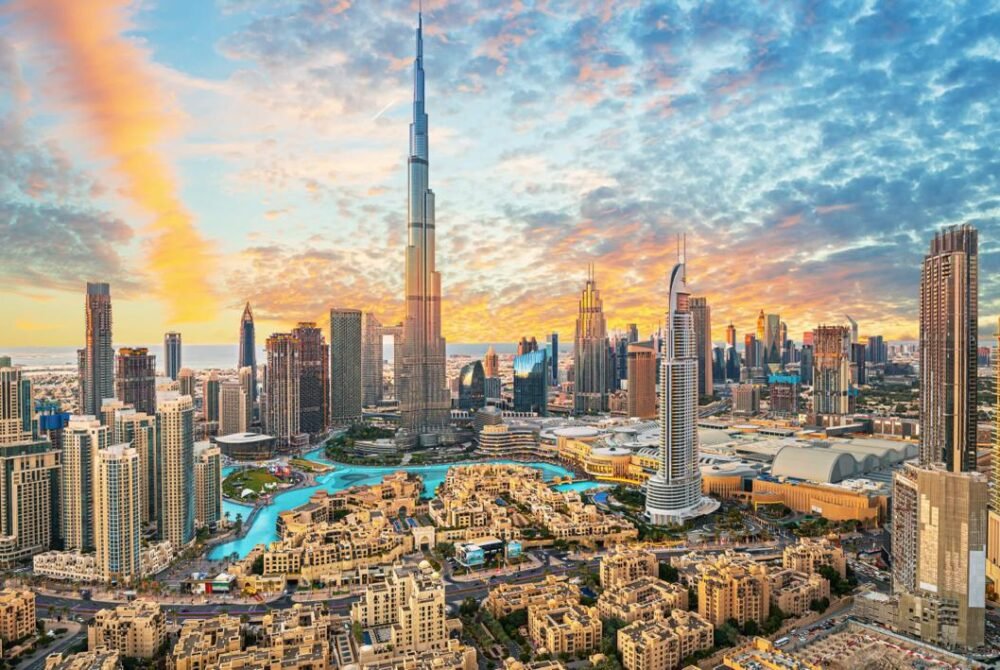
Dubai is heading into 2026 with serious momentum.
Property transaction volumes in 2025 have already exceeded last year’s totals, and demand remains strong across both buyers and tenants. This isn’t accidental growth, it’s being driven by population inflows, job creation, international business relocation, and Dubai’s continued positioning as a global lifestyle and investment hub.
Naturally, many investors are asking the same question:
If prices are already high, does 2026 still make sense?
The short answer: yes, but only if you invest smartly.
Why 2026 Is About Strategy, Not Speculation
After several years of rapid price appreciation, Dubai is entering a more balanced phase. Prices are no longer accelerating at the same pace, and that’s actually a positive sign.
A stabilising market creates healthier conditions:
More transparency
More choice
Better entry points for informed buyers
Upcoming supply over the next few years is being rolled out in a more controlled, location-specific way, which gives buyers leverage, especially those who understand where demand is real versus where it’s purely promotional.
At the same time, rental demand remains resilient. Dubai’s population continues to grow, professionals are relocating long-term, and housing demand is staying firmly supported.
For investors, this means returns should be evaluated carefully, factoring in:
Realistic rents
Service charges
Mortgage costs
Long-term tenant demand
Dubai’s regulatory framework, government support, and access to transparent market data make it one of the few markets globally where investors can make decisions based on facts, not hype.
Dubai Is Not One Market And That Matters in 2026
One of the biggest mistakes investors make is treating Dubai as a single, uniform market.
It isn’t.
Performance varies widely depending on:
Location
Asset type
Buyer profile
Delivery timelines
Rather than focusing on headline price growth, experienced investors look deeper. The real signals come from layered data such as:
Population growth and household formation
Employment hubs and business activity
Mortgage and financing trends
Supply delivery versus absorption
Rental performance at community level
When you break the data down properly, it becomes clear that demand remains organic and structural, especially in communities aligned with employment, accessibility, and family living.
Off-Plan Demand Still Matters
If You Read It Correctly
Off-plan transactions continue to be a strong indicator of market confidence. Healthy sell-through at sensible price points usually reflects genuine end-user and long-term investor demand.
However, smart investors in 2026 are looking beyond launch day sales.
A key factor many overlook is that a large portion of off-plan units begin trading on the resale market well before handover. In practice, this means some “future supply” is already active today, even if it doesn’t appear in official completion statistics.
Understanding the difference between:
Launched units
Sold units
Actively tradable off-plan units
is critical when assessing real supply pressure in specific areas.
This distinction often reveals opportunities and risks that headline numbers miss.
Ready vs Off-Plan: How Supply Is Really Playing Out
Completed properties continue to perform well, particularly in established communities with strong connectivity and amenities. End-user demand remains a powerful stabilising force in these areas.
Off-plan supply, meanwhile, is being delivered in defined clusters rather than across the entire city. This creates micro-markets where buyers have more choice and often stronger negotiating power.
High-activity apartment districts such as:
Jumeirah Village Circle
Business Bay
are seeing increased delivery volumes, reinforcing their role as residential hubs. In these locations, smart investors focus less on marketing promises and more on:
Building quality
Layout efficiency
Developer credibility
Pricing relative to competing stock
In this environment, knowledge beats speed. The opportunity is still there but it rewards precision.
Key Apartment Districts to Watch in 2026
Beyond JVC and Business Bay, higher-density apartment supply is concentrated in areas such as:
Dubai Sports City
Dubai Silicon Oasis
Town Square
Arjan
Dubai Studio City
These districts serve a growing mid-market population and reflect Dubai’s proactive planning approach. Importantly, activity remains community-specific, not citywide allowing investors to position themselves competitively within each micro-market.
Large-scale master developments like Jebel Ali also highlight how infrastructure-led planning enables new supply to be absorbed efficiently over time.
Why Villas Continue to Hold Their Ground
Villa communities remain one of the most resilient segments in Dubai.
Demand is consistently driven by residents looking for long-term homes, not short-term trades. While much of the upcoming supply is apartment-focused, villa releases remain measured supporting price stability across cycles.
Established villa communities benefit from:
Limited new supply
Strong lifestyle appeal
Mature infrastructure
As always, the strongest results come from selecting villas with sensible entry pricing, good construction quality, and a community that’s already functioning not just promised.
What Smart Investors Are Doing Differently in 2026
The most experienced investors aren’t stepping out of the market they’re refining how they invest.
Common strategies I’m seeing include:
Focusing on cash-flow resilience rather than quick appreciation
Choosing completed or near-handover assets with proven rental demand
Stress-testing returns using conservative assumptions
Avoiding over-leverage, even when financing is accessible
Prioritising developers with consistent delivery records
Spreading risk across locations and asset types
This is what a maturing market looks like discipline replaces speculation.
Final Thoughts: Is 2026 Still a Good Time to Invest?
For investors who value clarity, data, and long-term fundamentals, 2026 remains a solid entry point into Dubai real estate.
Price stabilisation, wider choice, strong rental demand, and transparent data have created a market that rewards informed decisions.
Dubai today is more regulated, more structured, and more resilient than in previous cycles. Growth is being supported by real population demand, economic diversification, and end-user activity not just investor sentiment.
The best results in 2026 will come from investors who focus on quality assets, realistic pricing, and locations aligned with Dubai’s long-term growth story.